Storefronts in Downtown Binghamton: What Tenants Need to Know
A 1,000-square-foot storefront in a 1908 building costs less than parking a single car in a Manhattan garage. Here is what to actually do with that.
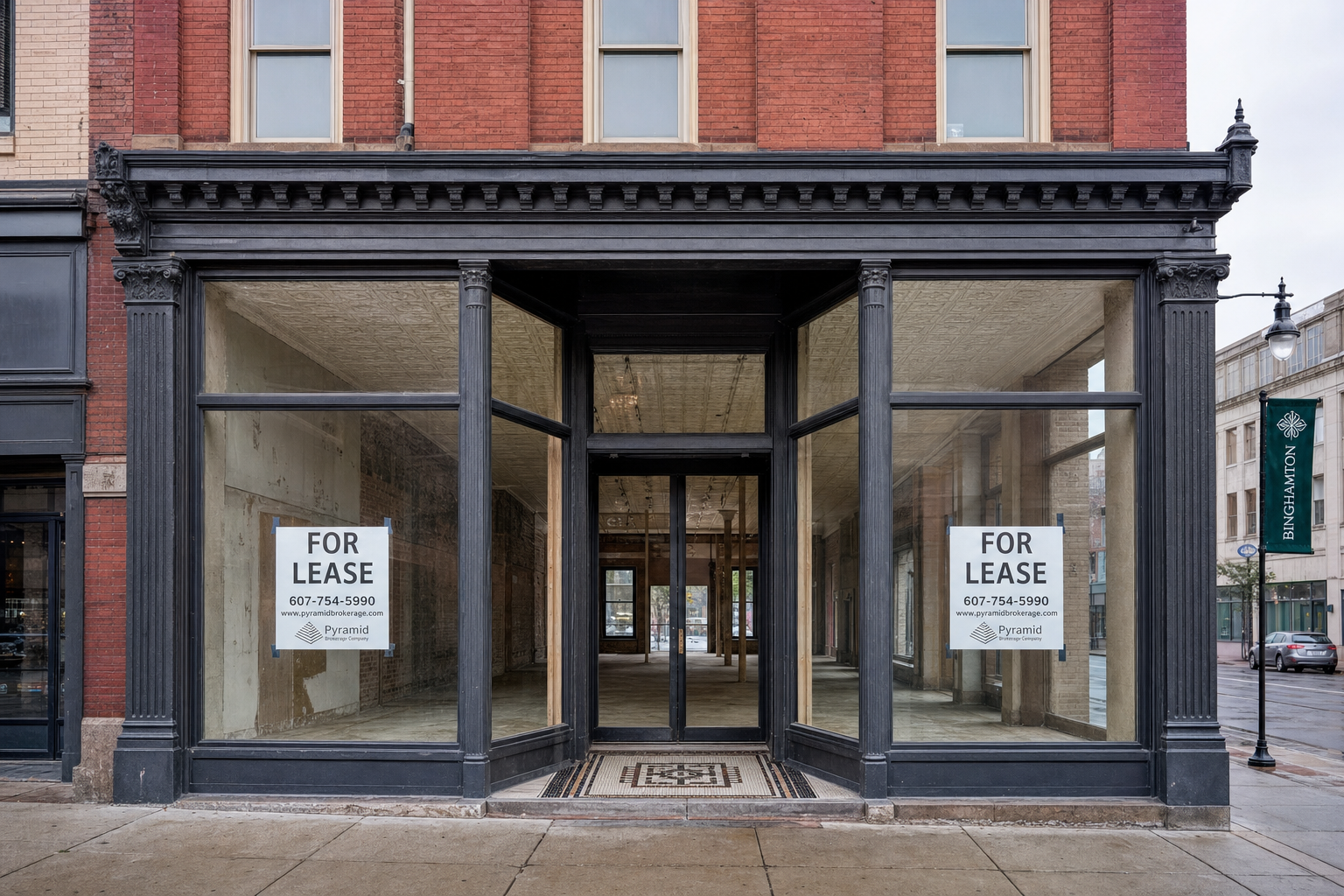
A 1,000-square-foot ground-floor commercial storefront on Court Street in downtown Binghamton rents for about $1,600 a month in 2026. The equivalent space in Brooklyn is $15,000. The equivalent space in downtown Ithaca is $4,200. The math is genuinely different here, and it is part of why downtown Binghamton's storefront occupancy has been quietly climbing since 2020 — coffee shops, salons, a record store, a board game cafe, a leather goods workshop, a small architecture firm that decided it did not need to be in a coworking space anymore.
We own and operate five commercial storefronts across our downtown portfolio. We have leased to first-time business owners, to established regional chains, to nonprofits, and to people who frankly should not have signed a commercial lease but did anyway. Below is what we have learned about what a good commercial tenancy looks like, and what to ask before you sign anything.
What you are actually getting
A typical downtown Binghamton historic storefront in our portfolio:
- 800 to 1,400 square feet
- Ground-floor with one or two display windows facing the street
- Original tin ceiling, sometimes restored, sometimes still painted over
- Hardwood or original tile floors
- One small bathroom (sometimes two — varies by building)
- Single HVAC unit, usually a recently installed split system
- 200-amp electric service, 100-200 amp panel in the storefront
- Either an open floor plan or one to three smaller back rooms
For the full inventory and current vacancy, see our commercial rentals page and storefronts for rent.
The honest 2026 pricing
- 800 sq ft, average finish: $1,400/month
- 1,000 sq ft, restored: $1,600-1,800/month
- 1,400 sq ft, premium location (Court/State corner): $2,000-2,100/month
Net (you pay your own utilities, you pay your own commercial insurance, you handle your own snow removal in front of your storefront). NNN leases are not standard here — most of our commercial deals are gross plus utilities, simpler than what is typical in larger markets.
Standard lease length: 36 months, with two 24-month renewal options at fair market.
What a build-out usually involves
If you are doing a coffee shop, a restaurant, or anything food-service:
- Grease trap installation (if not already present): $4,000-8,000
- Ventilation hood for cooking: $6,000-15,000 depending on type
- Three-compartment sink and prep sinks: $2,000-4,000
- ADA-compliant bathroom: $5,000-10,000 if not already present
- Electrical upgrade if you need 240V circuits: $2,000-4,000
- Permits and Broome County health department approval: $1,500-3,000
Total food-service build-out for a small cafe: $25,000-50,000. We have done multiple of these in our buildings. We can connect you with the contractors who have done them, and in some cases we will contribute to build-out cost in exchange for a longer lease term or assignment rights to the improvements.
For non-food retail (clothing, books, salon, services): build-out is typically $5,000-15,000 — paint, fixtures, signage, point-of-sale, maybe a small bathroom upgrade.
What to ask before you sign
A short list of questions most first-time commercial tenants do not ask:
1. Who pays for permits? Get this in writing. Typically the tenant pays for permits related to their specific use. The landlord pays for any base-building permits.
2. What signage am I allowed to install? Downtown Binghamton is a historic district. Some signage requires Historic District Commission review. Ask before designing.
3. What were the previous tenant's utility bills? Real numbers help you budget. We will share previous tenant utility data when available (with permission).
4. What is the assignment clause? If your business grows or you sell it, can you transfer the lease? Standard commercial leases require landlord consent. Negotiate "consent not unreasonably withheld."
5. What happens if my business does not work? Most commercial leases include a personal guarantee from the business owner. Negotiate a "good guy guarantee" — the personal liability ends when you vacate the space and pay outstanding rent through the vacate date, even if the lease term has not expired.
6. Who maintains what? Mechanical systems, roof, structural, signage, interior finishes — all need to be specifically assigned. The default in our leases: we maintain the building shell and major systems; you maintain interior finishes and your own equipment.
Where the deals actually happen
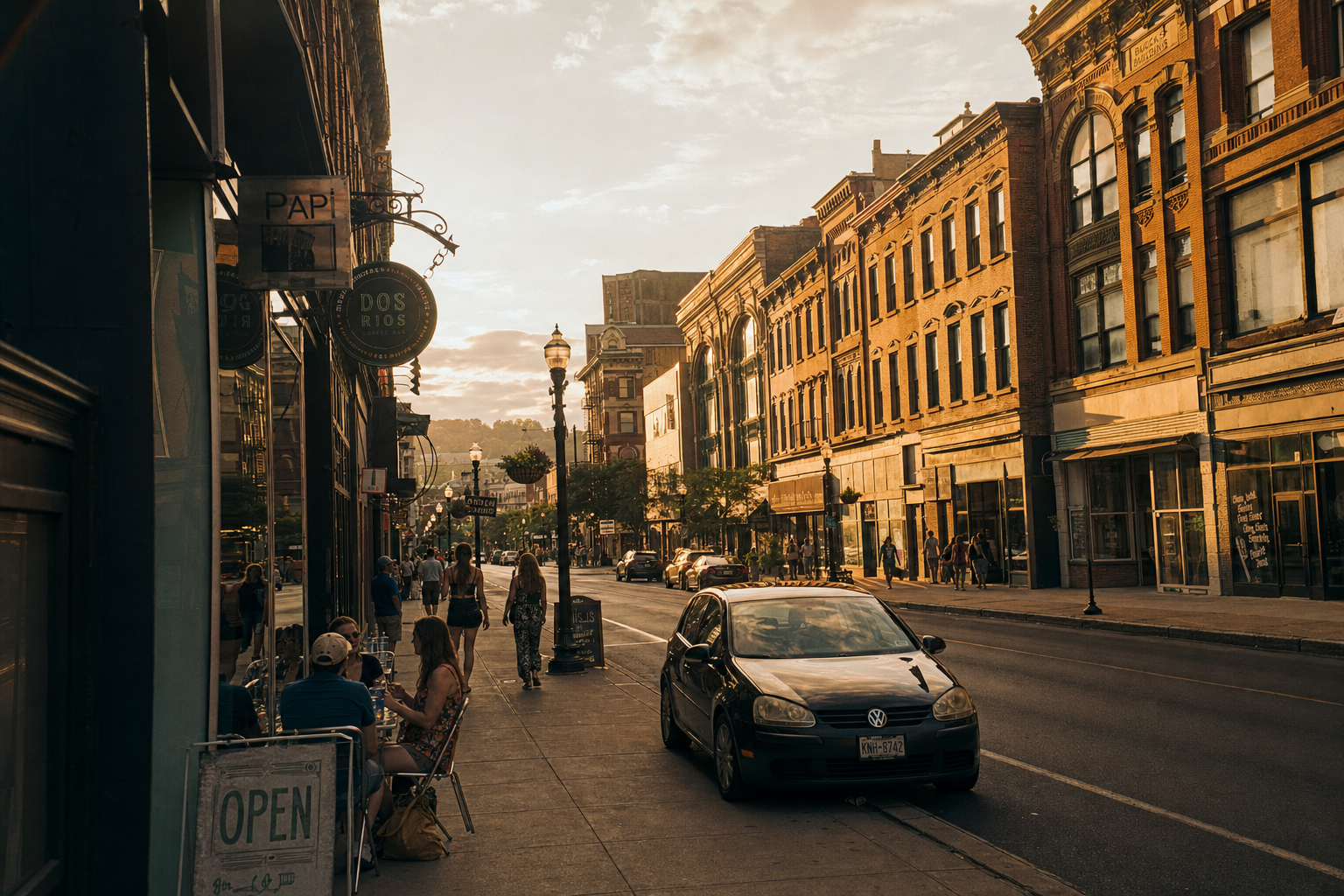
The Court Street corridor is the highest-foot-traffic part of downtown. State Street between Court and Henry is the second-highest. Front Street is quieter but cheaper and gets the riverwalk foot traffic in spring/summer. Main Street north of Court is in active redevelopment — rents are still soft and the upside is real if you can wait three to five years.
For tenants who would benefit from foot traffic generated by adjacent retail, Court Street is the obvious answer. For tenants doing destination businesses (a workshop, a service business, an office) where customers come to you specifically, Front Street or northern Main Street saves you $400-600 a month.
The "I want to start a business but I'm scared" version
We have had this conversation a dozen times. The honest version: a downtown storefront in Binghamton in 2026 is one of the lowest-cost ways to test a retail concept in the Northeast. The rent is low enough that even a slow first year does not necessarily kill you. The community is small enough that word-of-mouth actually works. The local economic development organizations (the Agency, Binghamton Local Development Corporation, Greater Binghamton Chamber) have small business grants and forgivable loans for downtown tenants that can defray build-out cost.
If you have a concept, an honest cost projection, and the willingness to be in the storefront every day for the first year, downtown Binghamton is a real place to start. Not a guaranteed success. Just a market where the math is not against you the way it is in the larger Northeast cities.
For our current commercial inventory, see commercial rentals and storefronts for rent. For the broader picture of why downtown Binghamton works as a small-business market, our downtown rentals page covers the residential side that gives your storefront its customers.
Email leasing@binghamtonliving.com with your concept and we will set up a walk-through.
Questions about this guide.
How much does a downtown Binghamton storefront cost to rent?+
$1,400-2,100 per month for 800-1,400 sq ft of ground-floor commercial space, depending on location and condition.
What is the typical commercial lease length?+
36 months with two 24-month renewal options at fair market.
Do you offer rent abatement or build-out contributions?+
Sometimes, in exchange for a longer lease term or assignment of improvements at lease end.
Is signage restricted in downtown Binghamton?+
The downtown is a national historic district. Some signage requires Historic District Commission review. We help tenants navigate this.
Listings related to this guide.
Hand-picked from our current availability that matches what this guide covers.
More from our editorial desk.
Questions about renting with us, or a specific unit you saw in this guide?