Restored Historic Apartments vs. New Construction in the Southern Tier
Hardwood floors and ten-foot ceilings versus in-unit laundry and central air. Which trade actually wins?
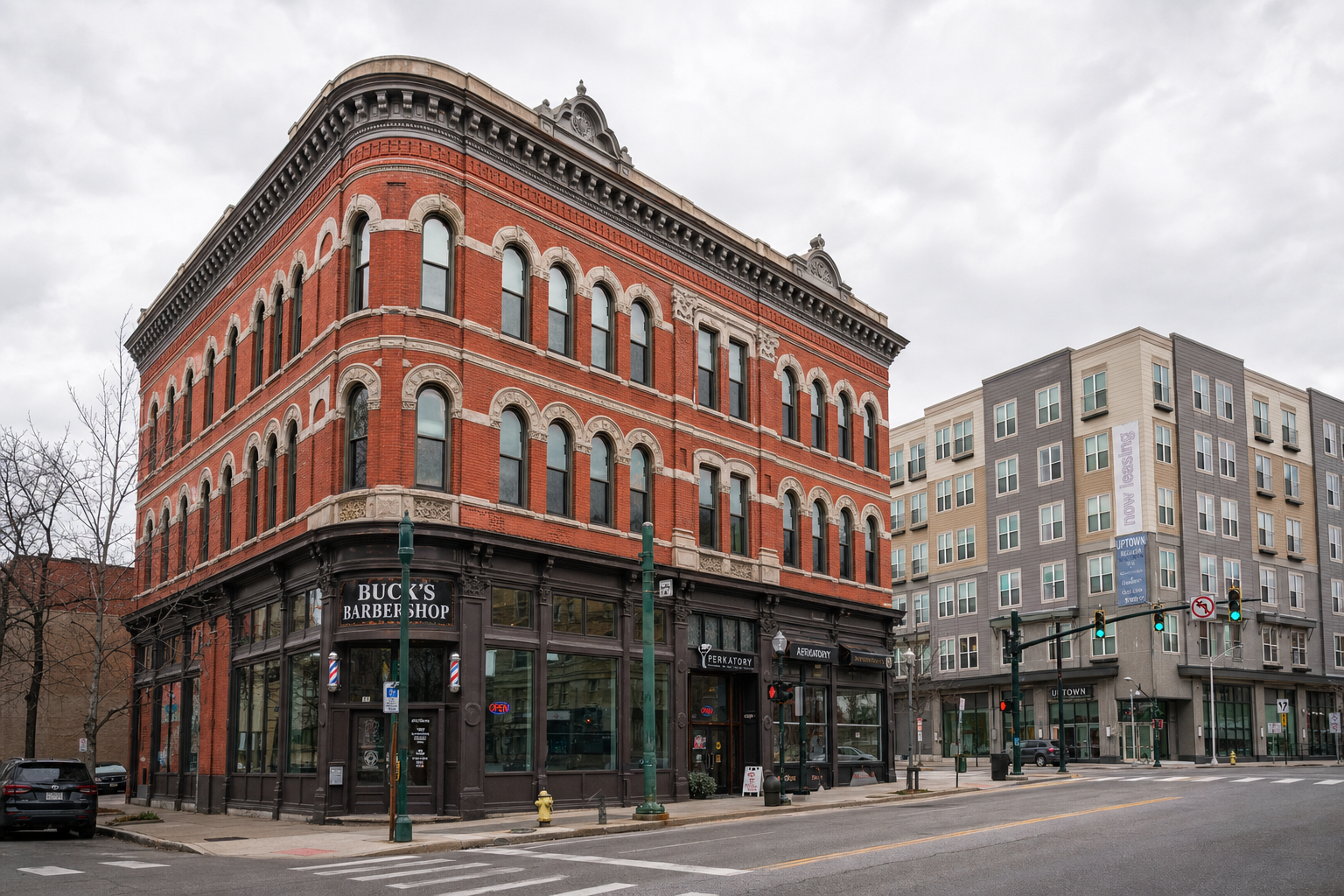
Walk around the Greater Binghamton rental market for a week and you will see two distinct kinds of apartment. The first kind is brick, has tall windows, was built between 1898 and 1924, and has the kind of original detail that makes a room feel substantial. The second kind is light gray or beige, has a gym in the lobby, was built sometime after 2015, and feels like every other new apartment complex in any mid-sized American city. Both kinds rent. Both kinds have tenants who love them. Most renters never directly compare them because they shop in one camp.
We restore old buildings. That is a bias we hold. But we have lived in new construction too. This is the honest tradeoff list.
What restored historic actually gives you
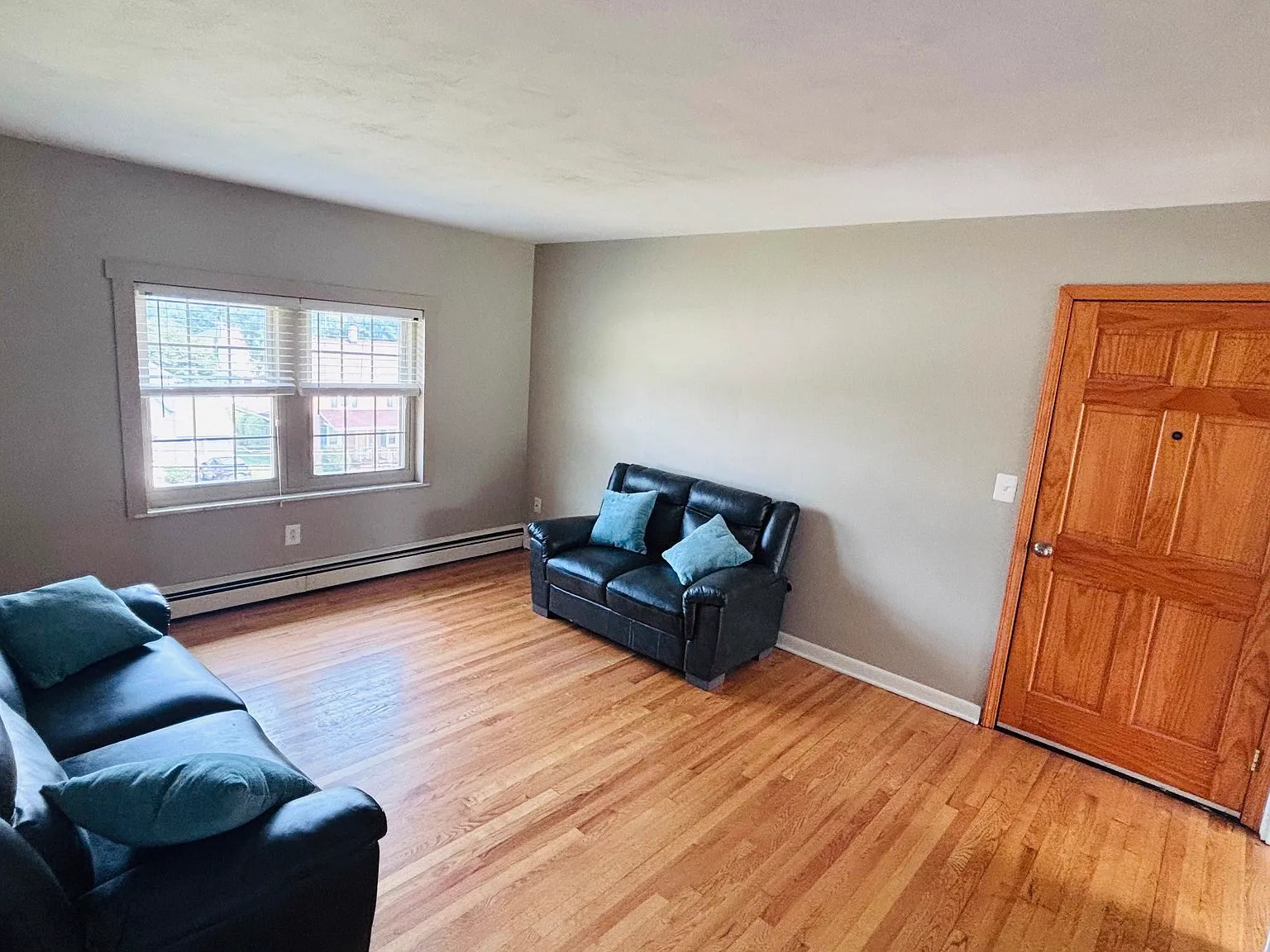
Walk into a typical apartment in our downtown Binghamton portfolio and the first thing you notice is the ceiling. Ten to fourteen feet on the lower floors, depending on the building. Then the windows — double-hung, original frames, 4-by-7 or larger. Then the floors — usually red oak or maple, refinished, with the dents and patina the wood collected over 110 years still visible.
A short list of what this kind of building gives you that new construction cannot:
- Rooms with proportions a person can feel. A 13x14 bedroom with 11-foot ceilings reads as a different scale of room than a 12x12 with 8-foot ceilings, even though it is only marginally bigger.
- Real wood floors. Not luxury vinyl plank with a wood pattern. Wood.
- Walls thick enough to mean it. Brick exterior walls 16 inches deep. Interior walls of plaster on lath. Sound transfer between units is measurably better than in modern stick-frame.
- Original detail. Crown molding. Pocket doors. Tin ceilings in some of our commercial floors. Doors with transom windows. Brass hardware.
- Tax credits funding the restoration. The federal Historic Rehabilitation Tax Credit and New York State's parallel program defray restoration cost. That is part of why the rent on a restored building stays reasonable.
The official National Park Service page on historic tax credits explains the program. Most of our buildings are in the Court Street, Main Street, or Front Street national historic districts.
What restored historic does not give you
Honesty is the only currency that matters here. What you give up:
- Central air, usually. Most pre-WWII commercial buildings do not have ductwork. We install split-system AC in the bedrooms and main living areas of our restored units, but it is room-by-room, not whole-house.
- In-unit laundry, sometimes. About 60% of our 2-3 bedroom units and 30% of our 1-bedrooms have washer/dryer in-unit. The rest have shared laundry in the building basement or rear addition.
- A gym, a pool, a "amenity package." None of our buildings have these. If you want a gym in your apartment building, we are not the answer. Recreation Park is a 12-minute walk and free.
- Brand-new everything. Restored kitchens have modern appliances and modern surfaces. They are not 2026 spec-grade quartz waterfall islands. They are good honest kitchens.
- A parking garage with assigned spots. About half of our buildings have off-street parking; the other half are on-street with city residential permits.
What new construction in the Southern Tier actually looks like
The new apartment complexes around BU main campus in Vestal, in the eastern suburbs, and along Vestal Parkway tend to follow a national template:
- 4-story stick-frame over a concrete podium
- Beige fiber-cement siding with metal panel accents
- Studio through 2BR units, 600-1,100 sq ft
- In-unit washer/dryer, dishwasher, garbage disposal
- Central air
- A clubhouse with a gym, a pool in season, a coffee bar
- Pet park
- $1,400-1,800/month for a 1BR
- $1,700-2,300/month for a 2BR
That spec works for a specific kind of tenant — somebody who values amenities and brand-new finishes, and who is willing to pay 30-50% more in rent for them.
The actual financial math
A 1BR comparison, 2026 Binghamton-area pricing:
- New construction in Vestal: $1,500/month, in-unit W/D, central air, gym in lobby, 750 sq ft
- Our restored 1BR downtown: $1,050/month, shared laundry, split AC, 800 sq ft, hardwood floors, 11-foot ceilings
That is $5,400/year less. Over a typical 3-year tenancy: $16,200. That is real money. It is a year of grad school tuition. It is a small down payment on a house. It is whether you can afford to take a year off and travel.
The trade is real either way. We just want you to look at the actual numbers before deciding.
Who picks which
Our experience after twenty-plus years of leasing both kinds of buildings: the tenants who pick restored historic over new construction tend to be people who have lived in a few apartments already, who have a preference for older architecture they can articulate, and who care about the proportions of a room more than the count of amenities. The tenants who pick new construction tend to be people for whom the apartment is a backdrop rather than a feature — they want it to be invisible, functional, and not require any thought.
Neither preference is wrong. Both make sense for who is choosing.
For the housing types we focus on, see studio apartments, one-bedrooms, two-bedrooms, and our broader portfolio in Binghamton.
How to test the difference yourself
If you are deciding between historic and new in the Binghamton area, visit one of each. Walk into a unit. Stand in the middle of the living room. Listen. Look up at the ceiling. Open a window. Walk on the floor. Spend ten minutes in each.
You will know which one feels like home.
Questions about this guide.
Do historic apartments have central air conditioning?+
Usually not — pre-WWII buildings rarely have ductwork. We install split-system AC in bedrooms and main living areas of our restored units.
Are restored historic buildings up to modern safety code?+
Yes. Restoration includes full rewiring, modern plumbing, fire suppression, smoke and CO detectors, and current building code compliance. The historic character is the wood, brick, and proportions — not the systems behind the walls.
Is rent higher in new construction or restored historic in the Binghamton area?+
New construction generally rents 30-50% higher for equivalent square footage. Historic restoration is partially funded by federal and state tax credits, which keeps rents reasonable.
Do you have in-unit washer/dryer in your historic buildings?+
About 60% of our 2-3 bedroom units and 30% of our 1-bedrooms. The rest have shared laundry on-site.
Listings related to this guide.
Hand-picked from our current availability that matches what this guide covers.
More from our editorial desk.

Questions about renting with us, or a specific unit you saw in this guide?